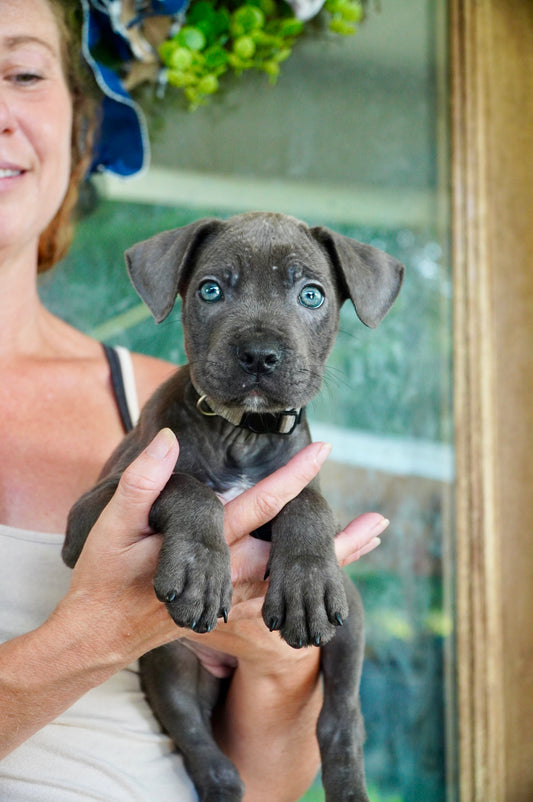
There is quite a lot of controversy around ear cropping for Cane Corso dogs, which is the process of surgically removing the floppy part of the ear, resulting in the ears being short, triangular, and upright. Ear cropping is done within 9-10 weeks of birth and is conducted via surgery by a licensed veterinarian while the puppy is put under full anesthesia. Although this is a personal decision for each dog owner, we choose to crop the ears for all of our Cane Corso puppies, unless a prospective buyer opts to keep the ears natural.
Ear cropping is part of the AKC standard for Cane Corsi, but it also serves more than an aesthetic purpose. Historically, as working dogs (farm, cattle, boar-hunting, and protection dogs) Cane Corsi faced risks from predators or livestock. Cropping removes the long, floppy "handles" that an opponent or animal could bite, grip, or tear. Floppy ears are highly vascular; if they are torn or wounded in a fight or brush, they bleed profusely, which can develop into a hematoma, a large pool of blood, in the floppy part of the ear. These can become infected, in serious cases, it can require emergency surgical removal of the entire ear. For us, ear cropping is a preventative measure taken to protect these working breed dogs.
Additionally, in our experience, removing the portion of the ear flap helps to improve airflow into the ear canal, which aids in drying moisture and reduces the risk of bacterial or yeast infections. It helps us to keep their ears clean and dry, which is one more tool in our toolkit for protecting the health and wellbeing of our dogs.