Edenish Acres
Morris Heading Collards
Morris Heading Collards
Couldn't load pickup availability
Experience the unique cabbage-collard hybrid with Morris Heading Collards – a distinctive variety that forms loose heads similar to cabbage while maintaining the cold-hardiness and flavor of traditional collards. These compact plants produce tender, sweet leaves perfect for fresh eating, cooking, and extending your harvest through winter.
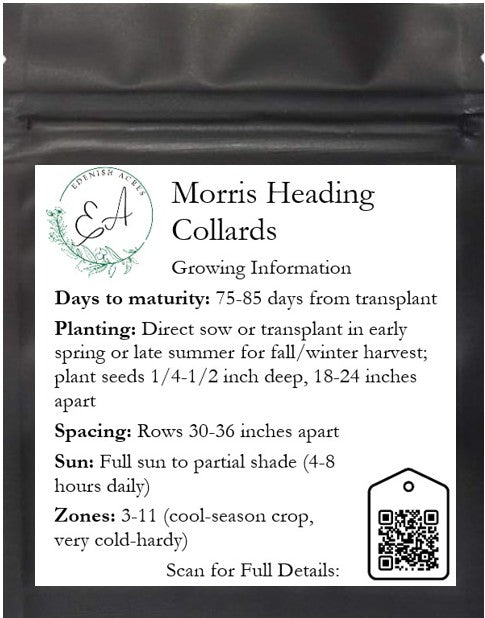
Growing Information
- Days to maturity: 75-85 days from transplant
- Planting: Direct sow or transplant in early spring or late summer for fall/winter harvest; plant seeds 1/4-1/2 inch deep, 18-24 inches apart
- Spacing: Rows 30-36 inches apart
- Sun: Full sun to partial shade (4-8 hours daily)
- Zones: 3-11 (cool-season crop, very cold-hardy)
Harvest & Use
Harvest individual leaves as needed, or cut the entire loose head when it reaches 8-12 inches across. The heading habit makes harvesting easier and produces more tender leaves than non-heading varieties. Flavor sweetens after frost. Perfect for Southern-style cooking, sautéing, adding to soups, or enjoying fresh in slaws and salads when young. The compact growth makes these ideal for smaller gardens or intensive planting.
Care Tips
Morris Heading collards thrive in rich, well-drained soil with consistent moisture. Water regularly – about 1-2 inches per week. Mulch to conserve moisture and regulate soil temperature. Side-dress with compost or nitrogen fertilizer every 3-4 weeks for optimal production. Extremely cold-hardy, surviving hard frosts and improving in flavor after cold weather. Companion plant with onions, beets, or herbs for natural pest management and garden diversity.
Why Choose Morris Heading
This unique variety offers the best of both worlds – the cold-hardiness and nutrition of collards with the compact, tender growth habit of cabbage. Perfect for gardeners who want easier harvesting, more tender leaves, and space-efficient production, Morris Heading delivers exceptional quality and versatility that sets it apart from traditional collard varieties.
Share